
Why Your Vitamin D3 Supplement Might Be Doing Less Than You Think

Here’s a scenario that plays out more often than most people realize: you’ve been taking a vitamin D3 supplement every day for six months. Your doctor ordered a blood panel, and your 25(OH)D levels are still sitting in the low-normal range — somewhere around 22 ng/mL — despite the fact that you’re swallowing 2,000 IU daily without fail. You’re doing everything right, or so you thought. You’re confused. Your doctor shrugs and says “maybe take more.” But what if the problem isn’t the dose? What if it’s the form, the delivery method, or the way you’re taking it?
This scenario is more common than the supplement industry would like to admit. Vitamin D deficiency remains one of the most prevalent nutritional shortfalls in the United States — the NIH Office of Dietary Supplements estimates that roughly 35% of US adults have insufficient vitamin D status. Yet billions of dollars worth of D3 supplements are sold every year. The disconnect between supplement sales and population-level deficiency rates suggests something more nuanced is happening at the absorption level — and that’s exactly what we’re going to break down here.
In this article, we’re going forensic on vitamin D3: the biochemistry of D3 versus D2, what delivery method actually does to absorption rates, how co-supplementing with vitamin K2 may influence both bioavailability and utilization, and how to read third-party testing certifications so you can actually trust what’s in your softgel. This isn’t a buying guide (check our Best Vitamin D3 + K2 Supplements 2026 for that). This is the science underneath the label.
D3 vs. D2: The Biochemical Case for Cholecalciferol
The distinction between vitamin D3 (cholecalciferol) and vitamin D2 (ergocalciferol) is not just a marketing point — it reflects a meaningful difference in how the two molecules behave inside the human body. Both forms require hepatic and renal conversion to become biologically active, but the pathways and efficiencies differ in ways that are now fairly well characterized in the literature.
Vitamin D3 is the form your skin synthesizes when exposed to UVB radiation. Specifically, 7-dehydrocholesterol in the skin is photolyzed to pre-vitamin D3, which undergoes thermal isomerization to cholecalciferol. It then travels via the bloodstream to the liver, where the enzyme CYP2R1 hydroxylates it to 25-hydroxyvitamin D3 [25(OH)D3], also called calcifediol. From there, the kidneys (and various peripheral tissues) further convert it via CYP27B1 to the fully active 1,25-dihydroxyvitamin D3 [1,25(OH)₂D3], or calcitriol — the form that actually binds vitamin D receptors (VDR) throughout the body.
Vitamin D2, by contrast, is derived from fungal ergosterol via UV irradiation. It undergoes similar hepatic and renal hydroxylation steps, but the resulting metabolites — 25(OH)D2 and 1,25(OH)₂D2 — have a different side chain structure (a double bond between C22 and C23, plus a methyl group at C24). This structural difference appears to affect binding affinity to vitamin D-binding protein (VDBP) in plasma. A 2012 study published in the Journal of Clinical Endocrinology & Metabolism found that 25(OH)D2 has a markedly lower affinity for VDBP compared to 25(OH)D3, which means it circulates with less protection, gets cleared faster, and raises serum 25(OH)D levels less efficiently per IU consumed.
Multiple randomized controlled trials have compared equimolar doses of D2 and D3 in raising and sustaining serum 25(OH)D. The consistent finding: D3 is more effective, sometimes substantially so. A meta-analysis of head-to-head trials found D3 raised 25(OH)D levels substantially more than D2 at equivalent doses, with some analyses suggesting approximately 80-90% greater increases.ximately 87% more than D2 at equivalent doses over the course of a supplementation period. The difference is especially pronounced with weekly or monthly megadose protocols — D2 raises levels less, and those levels fall faster after dosing stops.
For practical purposes, this means if you’re seeing vitamin D2 on a supplement label (sometimes listed as “ergocalciferol”), you are almost certainly getting less value per IU than a D3 product. D2 still shows up in some prescription-dose vitamin D products (e.g., 50,000 IU Drisdol) and some vegan D supplements derived from mushrooms or lichen — though vegan D3 from lichen is now widely available and a genuinely better option for plant-based consumers. When shopping, always confirm the form: cholecalciferol equals D3; ergocalciferol equals D2.
Delivery Methods and Absorption: What the Research Actually Shows
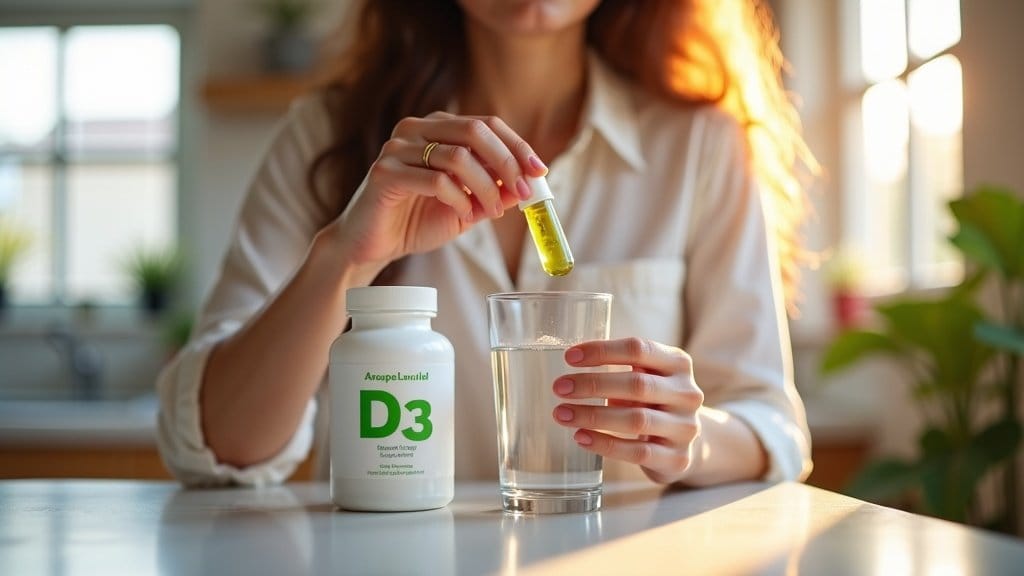
Even if you’ve chosen D3 over D2, the delivery format — softgel, tablet, powder capsule, liquid drop, or liposomal emulsion — can meaningfully affect how much actually makes it into your bloodstream. Vitamin D is a fat-soluble vitamin. That single fact has enormous implications for absorption.
Softgels: The Gold Standard for Fat-Soluble Delivery
Softgel capsules suspend vitamin D3 in an oil-based carrier (most commonly olive oil, medium-chain triglyceride oil, or sunflower oil). Because vitamin D3 requires bile salt emulsification and incorporation into micelles for intestinal absorption, having it pre-dissolved in dietary fat is a significant advantage. The fat carrier triggers bile secretion, and the D3 molecules are already in a lipid environment that facilitates micellar packaging and chylomicron uptake through enterocytes into the lymphatic system.
A study published in Nutrients found that vitamin D3 in oil-based capsules produced significantly higher 25(OH)D response compared to the same dose in dry powder tablets, particularly when taken in a fasted state. The difference was less pronounced when tablets were taken with a high-fat meal, which partly compensates for the absence of an oil carrier — but most people don’t consistently time their supplements with fatty meals. For softgels, meal timing is still beneficial but less critical because the oil carrier is built in.
Tablets: Effective With the Right Conditions
Plain tablets and dry-powder capsules containing crystalline cholecalciferol without an oil matrix do work — but their performance is more conditional. Research published in the Journal of Bone and Mineral Research confirmed that when vitamin D is taken with a meal providing at least 11–15 grams of fat, absorption from dry formulations improves substantially. The practical problem is compliance: many people take supplements first thing in the morning on an empty stomach, or with a low-fat breakfast. Under those conditions, tablet-based D3 consistently underperforms relative to oil-based softgels.
If you’re using a tablet or dry capsule format, the evidence-based recommendation is simple: always take it with your fattiest meal of the day — typically lunch or dinner. Avocado, eggs, olive oil, nuts — any meaningful fat source will assist absorption. Taking it with a plain glass of water in the morning is the single most common reason for poor D3 response despite adequate dosing.
Liquid Drops and Liposomal Formulations
Liquid vitamin D3 drops — usually D3 suspended in MCT oil or olive oil — offer similar or superior absorption to softgels, since the oil-carrier principle is intact and the absence of a capsule shell means even faster release. These are particularly useful for children, elderly individuals who struggle with swallowing capsules, or anyone who wants precise dose titration.
Liposomal vitamin D3 is a newer delivery format where the D3 molecule is encapsulated within phospholipid bilayer vesicles, theoretically enabling more efficient uptake by bypassing some of the micellar absorption process. The rationale is biologically plausible — liposomes can fuse with cell membranes and potentially enhance intracellular delivery. However, as of 2026, the clinical evidence comparing liposomal D3 to standard oil-based softgels specifically is still limited. Early preliminary data shows promise, but we don’t yet have robust RCT evidence demonstrating that liposomal D3 meaningfully outperforms a quality softgel taken with food. The premium price of liposomal formulations (often 3–5× the cost per serving) isn’t yet justified by the available evidence for most people. Watch this space — better-powered trials are ongoing.
Emulsified and Water-Dispersible D3
Some manufacturers offer emulsified or water-dispersible vitamin D3, designed for individuals with fat malabsorption issues — those with conditions like Crohn’s disease, cystic fibrosis, short bowel syndrome, or post-bariatric surgery states. For this population, standard oil-based D3 may still be poorly absorbed because the entire fat-absorption pathway is compromised. Emulsified D3 (sometimes marketed as “micellar D3”) pre-forms the micellar structure outside the body, enabling some uptake even when endogenous bile secretion and lipase activity are reduced. For the general healthy population, this format offers no meaningful advantage over a standard softgel.
The D3 + K2 Synergy: What Peer-Reviewed Research Actually Says
Few supplement pairings have generated as much enthusiasm — and as much oversimplification — as vitamin D3 and vitamin K2. The marketing narrative is clean and compelling: D3 raises calcium absorption, K2 directs that calcium away from arteries and into bones, and together they’re safer and more effective than either alone. But what does the actual research show, and how does K2 affect D3 bioavailability specifically?
The Biological Rationale for Co-Administration
The theoretical basis for D3 + K2 co-supplementation is grounded in the shared role of both vitamins in calcium metabolism. Vitamin D3 (as calcitriol) upregulates the expression of several vitamin K-dependent proteins — most critically osteocalcin (a bone matrix protein produced by osteoblasts) and matrix Gla-protein (MGP), which inhibits arterial calcification. Both of these proteins require carboxylation by vitamin K2 to become biologically active. In the absence of adequate K2, the proteins are produced but remain undercarboxylated — essentially non-functional. High-dose vitamin D supplementation without sufficient K2 may therefore theoretically produce a scenario where calcium absorption is increased but the routing proteins needed to handle that calcium correctly are insufficiently activated.
A study published in Thrombosis and Haemostasis (2015) found that combined vitamin D and K supplementation was more effective at activating MGP than either vitamin alone in postmenopausal women, supporting the synergy hypothesis at the level of protein carboxylation. A 2019 randomized controlled trial in Nutrients similarly reported that the combination of D3 and K2 (MK-7 form) produced greater improvements in bone mineral density markers compared to D3 alone in a group of postmenopausal women over a 12-month period.
K2 Form Matters: MK-4 vs. MK-7
Not all K2 is created equal. The two most discussed forms are menaquinone-4 (MK-4) and menaquinone-7 (MK-7). MK-7 has a much longer half-life in plasma — roughly 72 hours versus just a few hours for MK-4 — meaning a once-daily dose of MK-7 (typically 90–200 mcg) produces stable, sustained plasma levels, while MK-4 may require multiple daily dosing to maintain effectiveness (dosing used in Japanese osteoporosis trials has been as high as 45 mg/day — dramatically higher than the doses in most Western supplements). For most consumers buying combination D3/K2 supplements, MK-7 at 90–200 mcg per day is the evidence-aligned form and dose.
Does K2 Directly Affect D3 Bioavailability?
Here’s where we need to be careful about overclaiming. The synergy between D3 and K2 is primarily about downstream utilization of the calcium that D3 mobilizes — not about K2 making D3 itself absorb better or raising serum 25(OH)D more effectively. There is no strong clinical evidence that taking K2 alongside D3 significantly increases 25(OH)D blood levels compared to taking D3 alone. The value of K2 is in what happens after D3 does its job, particularly with respect to where calcium ends up in the body. This is a meaningful and clinically relevant benefit — but it’s different from enhancing D3 absorption per se.
For more on how this combination performs in practice and which combined products we recommend, see our Best Vitamin D3 + K2 Supplements 2026 guide, and for readers interested in a broader stack, our Stacking Vitamin D3 + K2 with Omega-3 Fish Oil guide covers the three-way combination in detail.
Comparison Table: D3 Delivery Methods, Forms, and Key Products
| Format | Carrier/Mechanism | Absorption Relative to Softgel | Meal Timing Sensitivity | Best For | Example Product | Approx. iHerb Price/Serving | Key Caution |
|---|---|---|---|---|---|---|---|
| Oil-Based Softgel (D3) | Pre-dissolved in olive oil / MCT oil | Reference standard (highest) | Low — built-in fat carrier | Most adults; general supplementation | NatureWise Vitamin D3 5000 IU | $0.04–$0.08 | Check oil quality; avoid soybean oil if sensitive |
| Dry Tablet (D3) | Crystalline cholecalciferol, no oil | Lower fasted; comparable fed | High — must take with fatty meal | Budget-conscious; always taken with meals | NOW Foods Vitamin D3 2000 IU | $0.02–$0.05 | Absorption drops significantly if taken fasted |
| Liquid Drops (D3 in MCT oil) | Oil suspension; no capsule shell | Comparable to softgel; fast release | Low | Children, elderly, precise dosing | Thorne Vitamin D Liquid | $0.10–$0.20 (per drop serving) | Dropper accuracy varies; easy to over-dose |
| Liposomal D3 | Phospholipid vesicle encapsulation | Potentially higher; evidence limited | Very low | Premium buyers; early-adopter interest | Various liposomal brands | $0.30–$0.80 | Premium cost not yet justified by RCT data vs. softgels |
| Emulsified / Micellar D3 | Pre-formed micelles; water-dispersible | Superior for malabsorption conditions | Very low | Crohn’s, bariatric post-op, fat malabsorption | Klaire Labs Micellized D3 | $0.20–$0.50 | Unnecessary for healthy GI function; higher cost |
| D3 + K2 Combined Softgel | Oil-based; co-formulated MK-7 | Same as softgel for D3 component | Low | Adults concerned about bone/cardiovascular health | Life Extension Vitamins D and K | $0.10–$0.25 | Confirm MK-7 dose ≥90 mcg; avoid if on warfarin |
| Vegan D3 (Lichen-Derived Softgel) | Cholecalciferol from lichen; oil carrier | Comparable to standard D3 softgel | Low | Vegans, vegetarians | Garden of Life Vitamin D3 | $0.10–$0.20 | Same effectiveness as lanolin-derived D3 per current data |
| Vitamin D2 (Ergocalciferol) | Fungal-derived; varies by format | Approximately 87% less efficient than D3 | Similar to D3 format used | Only when D3 unavailable; some prescription forms | Various generics | $0.02–$0.10 | Inferior for maintaining 25(OH)D levels; avoid if possible |
Third-Party Testing: How to Validate What’s Actually in Your Supplement
The supplement industry in the United States operates under a regulatory framework that places the burden of proof largely on the manufacturer after a product is on the market, rather than before. The FDA’s CGMP (Current Good Manufacturing Practice) regulations for dietary supplements require that manufacturers test identity, purity, strength, and composition — but independent FDA verification of every product is not systematic. In practice, this means a product can legally sit on a shelf with label claims that have never been independently verified by a third party. For fat-soluble vitamins like D3, which are stored in body fat and can accumulate over time, potency accuracy is not a trivial concern.
USP Verification
The US Pharmacopeia (USP) Verified mark is one of the most rigorous third-party certifications available in the US supplement market. Products carrying the USP Verified mark have been tested to confirm that they contain the labeled amounts of ingredients, don’t contain harmful levels of contaminants, will disintegrate and release ingredients properly, and are manufactured according to FDA CGMP standards. For vitamin D3, USP verification specifically confirms that potency is within acceptable bounds — critically important given that studies have found significant variability between labeled and actual D3 content across brands. Not many D3 brands carry USP verification, but those that do (such as certain Nature Made Vitamin D3 products) represent a meaningful quality signal.
NSF International Certification
NSF International offers several certification programs relevant to supplement buyers. NSF Certified for Sport is the gold standard for athletes (and arguably for any consumer) because it involves testing for over 270 substances banned in sports, in addition to label accuracy and contamination testing. For vitamin D3 specifically, unless you’re a competitive athlete subject to drug testing, NSF Certified for Sport is more rigorous than necessary — but NSF’s standard dietary supplement certification still provides meaningful quality assurance, including label claim verification and contaminant screening.
Informed Sport and Informed Choice
Informed Sport and Informed Choice (certifications run by LGC Group) are widely recognized in the sports nutrition world and increasingly in general supplement quality evaluation. Informed Sport involves batch testing — meaning each production batch is tested, not just a one-time product certification. This is particularly relevant for quality-conscious consumers because it accounts for manufacturing variability across production runs. Products bearing the Informed Sport mark can be verified on the Informed Sport website by lot number.
ConsumerLab.com and Labdoor
ConsumerLab.com is an independent testing organization that purchases supplements off retail shelves, tests them for potency and contaminants, and publishes results (subscription required). Their vitamin D testing has historically revealed significant discrepancies — some products tested considerably over label claim, some considerably under. Labdoor similarly tests and grades supplements on potency accuracy, product safety, nutritional value, and projected efficacy, and provides free access to a summarized ranking. Both services are worth consulting before purchasing a D3 supplement, particularly from a brand you haven’t used before.
What Testing Can and Cannot Tell You
It’s important to understand what third-party testing validates and what it doesn’t. Potency testing confirms the amount of D3 (or D2) in the capsule matches the label — but it doesn’t directly test what your body will absorb (bioavailability). Bioavailability is influenced by the delivery format, your individual gut microbiome, fat malabsorption conditions, and concurrent nutrient intake — none of which a potency test addresses. A product can pass potency certification with flying colors and still deliver sub-optimal D3 response if it’s a dry tablet and you’re taking it fasted every morning. Testing certification is necessary but not sufficient — you also need to attend to the delivery format principles discussed above.
Use Cases: Who Should Prioritize Which Approach
The Office Worker With Confirmed Deficiency (25(OH)D under 20 ng/mL)
This is the most common clinical scenario — someone with lab-confirmed vitamin D insufficiency or deficiency who needs to efficiently raise their serum levels. For this person, delivery format and dosing both matter significantly. A high-quality oil-based softgel at 4,000–5,000 IU/day is the evidence-aligned starting point. Taking it with the largest meal of the day — ideally one containing 15–20g of fat — will maximize absorption from each capsule. Re-testing 25(OH)D levels at 8–12 weeks is appropriate to assess response. Adding MK-7 K2 (90–200 mcg) is reasonable given the upstream calcium metabolism rationale, particularly if the person has any cardiovascular risk factors or bone density concerns. Budget-wise, a 365-count softgel of 5,000 IU D3 from a USP-verified or well-tested brand on iHerb or Amazon will typically run $8–$15 — roughly $0.02–$0.04 per serving, making this one of the cheapest health interventions available.
The Post-Bariatric Surgery Patient or Individual With Fat Malabsorption
Standard oil-based softgels may be insufficient for individuals with significantly impaired fat absorption — including those who’ve had gastric bypass, sleeve gastrectomy, or who have conditions like Crohn’s disease affecting the terminal ileum (where bile salt reabsorption occurs). For this population, emulsified or micellar D3 formulations, or water-miscible drops, are the clinically preferred approach. Dose requirements are typically higher as well — some clinical protocols in bariatric surgery populations use 3,000–6,000 IU/day or more, with more frequent 25(OH)D monitoring. This use case should be managed with a physician’s involvement rather than self-directed supplementation alone.
The Vegan or Vegetarian Seeking D3 Without Animal Products
Standard cholecalciferol is derived from lanolin — the waxy secretion from sheep’s wool — which is not acceptable to many vegans, and sometimes vegetarians. Lichen-derived vegan D3 (cholecalciferol) is now widely available and, based on current comparative data, appears biologically equivalent to lanolin-derived D3. Both are the same molecule. Vegan D3 from lichen is available in softgels (typically in a plant-based capsule with a plant-oil carrier), liquid drops, and some tablets. Vegan D2 from mushrooms remains an option but is the inferior choice for raising 25(OH)D levels as discussed above. For vegan K2 pairing, MK-7 from natto (fermented soybeans) is naturally vegan and is the form used in most D3/K2 combination products anyway. See our Best Multivitamins for 2026 guide for vegan multivitamin options that include D3 in meaningful doses.
The Competitive Athlete Subject to Anti-Doping Testing
For athletes in WADA-governed or USADA-governed sports, supplement contamination risk is a real concern — not because vitamin D3 itself is a prohibited substance, but because supplements can be contaminated with prohibited compounds during manufacturing. For this population, choosing a product with NSF Certified for Sport or Informed Sport batch-level certification is not optional — it’s the baseline standard. Several mainstream D3 products carry these certifications. The athletic population also tends to train at higher training volumes and may have higher vitamin D requirements for muscle function, immune support, and bone stress fracture prevention — a topic that has a reasonable body of supporting evidence.
Frequently Asked Questions
Is vitamin D3 actually better than D2, or is that just supplement industry marketing?
No — the superiority of D3 over D2 for raising and maintaining serum 25(OH)D levels is supported by legitimate peer-reviewed evidence, not just marketing. The fundamental difference lies in the structural chemistry of the two molecules and how they interact with vitamin D-binding protein (VDBP) in the bloodstream. D2 metabolites bind VDBP with lower affinity, resulting in faster plasma clearance — meaning D2-derived 25(OH)D rises faster after dosing but also falls faster, and the net area-under-the-curve elevation is lower compared to D3. Multiple meta-analyses of head-to-head randomized controlled trials confirm this. That said, D2 is not completely ineffective — it was used in clinical settings for decades, and at very high doses it can raise 25(OH)D meaningfully. But for everyday supplementation where you’re taking 1,000–5,000 IU/day, D3 is unambiguously the better choice. The one exception might be certain clinical protocols where D2 is prescribed by a physician at 50,000 IU weekly for correction of severe deficiency — in those cases, the sheer dose compensates for the efficiency gap. For over-the-counter use, always choose cholecalciferol (D3).
How much vitamin D3 should I actually be taking per day?
The answer depends on your current 25(OH)D blood level, your sun exposure, body weight, age, and individual absorption capacity — which is why anyone who is serious about vitamin D optimization should know their baseline blood level before choosing a dose. That said, the general ranges used in clinical practice are: for maintenance in a replete adult with moderate sun exposure, 1,000–2,000 IU/day is reasonable. For individuals with limited sun exposure, desk jobs, or darker skin tones (which reduces cutaneous D3 synthesis), 2,000–4,000 IU/day is commonly used. For documented deficiency (25(OH)D below 20 ng/mL), 4,000–5,000 IU/day under nutritional supervision is appropriate for repletion. The NIH’s official Tolerable Upper Intake Level (UL) for adults is 4,000 IU/day, though many experts argue this is conservative and that doses up to 10,000 IU/day appear safe in healthy adults based on toxicity studies. Vitamin D toxicity (hypervitaminosis D) typically only occurs with very prolonged very high dosing — generally above 40,000 IU/day for extended periods — but it is a real risk, which is why testing before mega-dosing matters.
Should I take vitamin D3 with food, and does it matter what kind of food?
Yes, for most formats, taking D3 with food meaningfully improves absorption — but the type of food matters more than most people realize. Vitamin D3 is fat-soluble, and its absorption depends on bile salt secretion and incorporation into lipid micelles in the gut before it can be absorbed by enterocytes. Dietary fat in a meal triggers gallbladder contraction and bile release, which is what drives this process. Research suggests that taking D3 with a meal containing at least 11–15 grams of fat produces significantly better absorption than fasted intake, particularly for dry tablet and capsule formulations. Good fat sources to pair with: eggs, avocado, olive oil, nuts, cheese, or any meal cooked with a fat. For oil-based softgels, the fat carrier is built in, so meal timing is less critical — but eating with a fat-containing meal is still the recommended approach. The worst case scenario: a dry tablet with a fat-free glass of water in the morning, which is unfortunately what a large percentage of supplement users do. If that’s you, simply shift your D3 to your biggest meal of the day and you may see meaningful improvement in your 25(OH)D levels without changing anything else.
What does K2 actually do alongside D3, and which form of K2 matters?
K2’s role alongside D3 is primarily about downstream calcium regulation, not about making D3 absorb better. When D3 raises calcium absorption in the gut, the body needs vitamin K-dependent proteins — specifically osteocalcin and matrix Gla-protein (MGP) — to be properly carboxylated (activated) so they can direct calcium into bones and prevent it from depositing in soft tissues and arterial walls. Without adequate K2, high-dose D3 supplementation could theoretically increase calcium-related cardiovascular risk, though this remains an area of active investigation and not settled science. As for form: MK-7 is the preferred form for supplementation due to its long half-life (approximately 72 hours), which maintains stable plasma levels from a single daily dose. MK-4 requires much higher doses to be effective based on the clinical trial literature. Look for at least 90 mcg of MK-7 in combination products; 180–200 mcg is used in some bone health trials. Important warning: if you take warfarin (a blood thinner that works by antagonizing vitamin K), you should not start K2 supplementation without discussing it with your prescribing physician, as it can affect your INR and anticoagulation status.
How long does it take for vitamin D3 supplementation to raise my blood levels?
The kinetics of 25(OH)D repletion are reasonably well characterized. After initiating D3 supplementation, serum 25(OH)D typically rises for 2–3 months before reaching a new steady state — the precise timeframe depends on baseline levels, dose, body composition (vitamin D is sequestered in fat tissue), and individual absorption. In practice, most clinicians recommend retesting 25(OH)D levels approximately 8–12 weeks after starting a new supplementation protocol. For someone starting at 15 ng/mL and taking 4,000 IU/day of oil-based D3 with meals, reaching 40–50 ng/mL within 8–12 weeks is a reasonable expectation, though individual responses vary. One confounding factor: body weight. Vitamin D distributes into adipose tissue, so heavier individuals require higher doses to achieve equivalent serum elevations compared to leaner individuals at the same dose — a pharmacokinetic reality that clinical dosing guidelines are increasingly acknowledging.
What should I look for on a supplement label to know I’m getting quality D3?
Start with the basics: verify the form says “cholecalciferol” or “vitamin D3 (as cholecalciferol)” — not ergocalciferol. Then look at the delivery format: is it an oil-based softgel? Is the oil listed (olive oil, MCT oil, sunflower oil are all fine)? For combination products, confirm the K2 form and dose: you want “menaquinone-7 (MK-7)” at ≥90 mcg, not just “vitamin K2” with an unspecified form. Third-party certifications are the next layer: USP Verified, NSF International, NSF Certified for Sport, Informed Sport, or Informed Choice marks are meaningful quality indicators. If none of those are present, check ConsumerLab.com or Labdoor for independent potency testing results on the specific brand. Also look at the “other ingredients” section — a clean formulation should have minimal fillers; avoid products with a long list of synthetic dyes, unnecessary additives, or allergens you’re sensitive to. Finally, check the serving size and cost per serving, not just the sticker price. A bottle of 365 softgels at $15 is a better value than 90 softgels at $18, even if the latter looks cheaper on the shelf.
Are there people who shouldn’t take vitamin D3 supplements?
Yes — there are specific populations who should approach vitamin D3 supplementation with caution or physician guidance rather than self-directing. Individuals with primary hyperparathyroidism have impaired calcium regulation that can be worsened by D3 supplementation. People with hypercalcemia (high blood calcium) of any cause should not supplement with D3 without medical supervision. Those with granulomatous diseases such as sarcoidosis, tuberculosis, or certain lymphomas have increased endogenous activation of vitamin D to its active form, and can develop vitamin D toxicity even at relatively modest supplementation doses. Individuals with kidney disease (particularly advanced CKD) have impaired renal conversion of 25(OH)D to calcitriol and may require a different supplemental form (calcitriol or alfacalcidol, prescribed by a nephrologist) rather than standard D3. And as mentioned above, anyone on warfarin should discuss K2 addition with their physician. For the vast majority of healthy adults, vitamin D3 supplementation in evidence-based doses is extremely safe — but these exceptions are real.
What are the top D3 supplements available on iHerb and Amazon in 2026, and which should I trust?
Rather than make a definitive ranked list here (our full guide does that — see Best Vitamin D3 + K2 Supplements 2026), let me give you the evaluative framework. On iHerb, price per serving for quality oil-based D3 softgels should be in the $0.04–$0.15 range. Brands with strong reputations for quality testing and accurate potency include Thorne Research, NOW Foods, Nordic Naturals, and NatureWise — all widely available on iHerb with competitive pricing. Nature Made products with USP Verification are among the most accessible third-party certified options on Amazon. For combination D3 + K2 products, Life Extension and Jarrow Formulas are well-regarded brands at reasonable price points. Always cross-check the specific product you’re considering against ConsumerLab or Labdoor results — brand reputation is useful but not a substitute for product-specific testing data. Finally, consider buying through the iHerb Review & Test 2026 guide to understand how to navigate the retailer’s certification filters for smart purchasing.
My Take: The Form You Choose Is Not a Minor Detail
After going through all of this, the core takeaway is more practical than it might seem from a research-heavy article: the difference between a high-quality oil-based D3 softgel taken with a meal and a dry tablet taken fasted can represent a meaningful real-world difference in your serum 25(OH)D response. At the population level, this matters. Vitamin D insufficiency has been associated with a wide range of health outcomes — immune function, bone health, muscle function, mood — and while the supplement industry has oversold many of these associations beyond what the evidence supports, the foundational case for maintaining adequate vitamin D status is solid.
The D2 vs. D3 choice is clear: always choose D3 (cholecalciferol) unless you have a specific clinical reason not to. The K2 pairing makes biological sense and has emerging evidence behind it for bone and cardiovascular calcium management — but don’t confuse K2 with making D3 absorb better. Those are different things. And third-party testing isn’t optional if you’re trying to actually know what you’re getting — use it as a baseline filter.
The science here isn’t fully settled — liposomal delivery, optimal K2 forms and dosing, individual genetic variation in vitamin D metabolism (particularly VDR and CYP2R1 polymorphisms), and the long-term cardiovascular implications of aggressive D3 supplementation are all active research areas. But you don’t need perfect certainty to make a substantially better choice than the default. Buy a quality oil-based D3 softgel from a third-party tested brand, take it with your biggest meal, pair it with MK-7 K2 if bone or cardiovascular health is a priority, and check your 25(OH)D levels twice a year. That’s evidence-based supplementation done right.
Last updated: 2026
Found this review helpful?
Subscribe to SuppFind.com for weekly supplement reviews, science breakdowns, and the best iHerb deals.
This article is for informational purposes only and does not constitute medical advice. Individual results may vary — consult a qualified healthcare professional before starting any supplement regimen. This post contains affiliate links (iHerb, Amazon); we may earn a small commission at no extra cost to you. All ratings and recommendations are based on independent research and ingredient analysis.