
The Questions Everyone Is Asking About Vitamin C Timing — And the Honest Answers
Here’s a question that showed up on r/Supplements recently and got hundreds of upvotes: “Does it actually matter when I take vitamin C, or am I just overthinking this?” The replies ranged from “just take it whenever” to detailed biochemistry explanations involving sodium-dependent transporters. The truth, as usual, sits somewhere in the middle — and it’s worth understanding properly if you’re spending money on supplements every month.
Vitamin C (ascorbic acid) is one of the most-purchased supplements in the US, yet it’s also one of the most misused. People either megadose it during cold season and ignore it the rest of the year, or they throw a 1,000mg tablet into their morning routine without thinking about the fact that their body can only absorb a fraction of that at once. The timing, the dose, the form, and whether you’ve eaten anything — these details compound. They’re not everything, but they’re not nothing either.
This Q&A article is designed to answer the questions you actually have — the ones you’d search at 11pm after reading contradictory Reddit threads. We’ll cover morning vs. night dosing, empty stomach vs. with food, iron absorption timing, how much you actually need, and which forms are worth the price premium. No hype, no oversimplification. Let’s get into it.
What Is Vitamin C and Why Does Timing Matter at All?
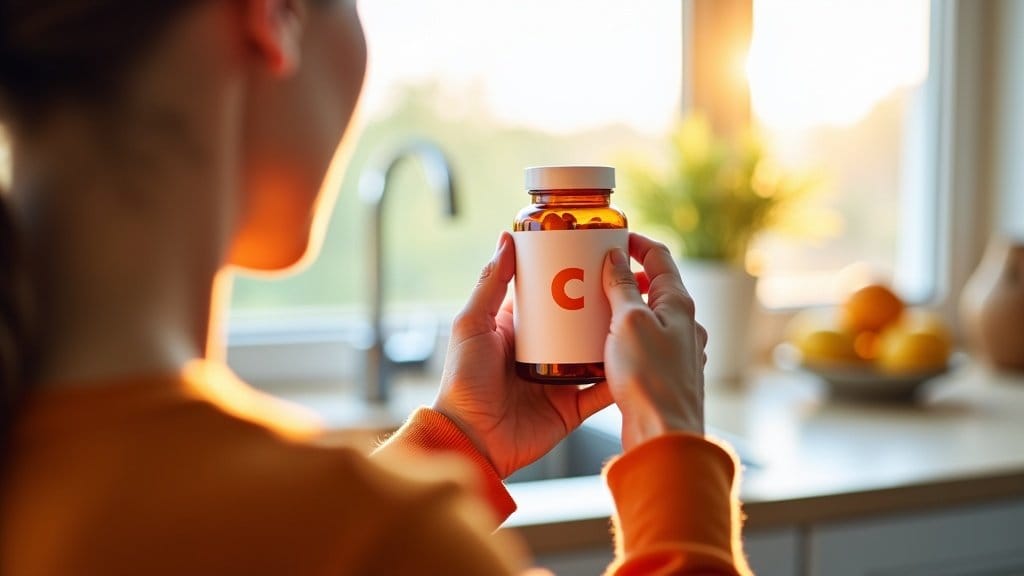
Before jumping into the Q&A, a brief orientation. Vitamin C is a water-soluble vitamin that acts as a powerful antioxidant, supports collagen synthesis, enhances non-heme iron absorption, and plays a role in immune function. Because it’s water-soluble, your body doesn’t store large reserves the way it does with fat-soluble vitamins like D or K. Excess vitamin C is excreted in urine relatively quickly, which is both reassuring from a toxicity standpoint and relevant to your dosing strategy.
The reason timing matters is twofold. First, absorption efficiency drops significantly at higher single doses — your intestinal transport system (primarily SVCT1 and SVCT2 transporters) becomes saturated. Second, the context in which you take vitamin C — with or without food, alongside iron-containing meals, or near certain medications — directly affects how useful that dose is for your body. Understanding these mechanics helps you get more from the same supplement without changing a single product.
For a broader look at how nutrient timing affects multiple supplements in your stack, our Magnesium Supplements 2026 Dosage Timing Guide is worth reading alongside this one.
Comparison: Vitamin C Forms and Their Absorption Profiles

Not all vitamin C supplements are created equal. The form you choose affects how well it’s tolerated on an empty stomach, how well it’s absorbed, and how much you’re paying per effective milligram. Before the Q&A section, here’s a side-by-side reference for the most common forms available on iHerb and Amazon.
| Form | Absorption Rate | Stomach Tolerance | Best Timing | Typical Dose/Serving | Price/Serving (iHerb est.) | Example Brand | Third-Party Tested | Best For |
|---|---|---|---|---|---|---|---|---|
| Ascorbic Acid (regular) | Good (dose-dependent) | Can irritate at high doses | With food or split doses | 500–1,000mg | $0.04–$0.10 | NOW Foods, Nature’s Way | Yes (NSF/USP some) | Budget-conscious buyers |
| Buffered Vitamin C (Calcium Ascorbate) | Good | Excellent — gentler on stomach | With or without food | 500–1,000mg | $0.12–$0.20 | Solgar, Ester-C | Yes (some USP) | Sensitive stomachs |
| Liposomal Vitamin C | Higher at large doses | Generally good | Morning, away from antacids | 500–1,000mg | $0.40–$0.90 | LivOn Labs, Quicksilver | Limited | High-dose users, advanced stacks |
| Vitamin C with Bioflavonoids | Potentially enhanced | Good | With food | 500–1,000mg | $0.10–$0.18 | Solaray, Garden of Life | Varies | Whole-food approach users |
| Chewable / Gummy Vitamin C | Good (lower doses) | Very good | With food | 125–500mg | $0.08–$0.15 | Vitafusion, SmartyPants | Some | Kids, swallowing difficulty |
| Time-Release Vitamin C | Moderate (extended) | Good | Morning or midday | 500–1,500mg | $0.12–$0.22 | Nature’s Bounty, Natrol | Limited | Those wanting sustained levels |
| Sodium Ascorbate | Good | Very gentle | With or without food | 1,000mg (powder) | $0.05–$0.12 | Bulk Supplements, NOW | Some | High-dose protocols, low sodium caution |
| Ester-C (Calcium Ascorbate variant) | Good — retained longer in WBC | Excellent | Any time | 500–1,000mg | $0.20–$0.35 | American Health, Solgar | Some | Immune focus, sensitive stomachs |
Prices are approximate based on iHerb listings as of 2026. Amazon pricing is typically within 10–15% of iHerb for most of these brands. Always verify current pricing before purchasing.
Real-World Use Cases: Who Takes What, When, and Why

Use Case 1: The Plant-Based Eater Who Needs Iron Absorption Help
If you follow a vegan or vegetarian diet, non-heme iron (the form found in plants like spinach, lentils, and tofu) is your primary dietary iron source — and it absorbs far less efficiently than heme iron from animal products. This is where vitamin C timing becomes genuinely strategic. Research consistently shows that consuming 75–100mg of vitamin C alongside or just before an iron-rich plant-based meal significantly enhances non-heme iron absorption — some studies suggest the enhancement can be substantial depending on baseline iron status and meal composition (exact figures vary by study). In this scenario, take 250–500mg of regular ascorbic acid or a buffered form like calcium ascorbate with your highest-iron meal of the day — often lunch or dinner. Don’t save it for morning on an empty stomach. The whole point is the meal interaction. NOW Foods Vitamin C-500 or Solgar Vitamin C 500mg with Bioflavonoids are solid, affordable options for this protocol, both available on iHerb for under $0.15/serving.
Use Case 2: The Office Worker Taking Vitamin C for Daily Immune Support
For the average desk worker taking vitamin C as general maintenance — not megadosing, not fighting off a cold — 250–500mg once daily is typically sufficient to keep plasma levels topped up, especially if dietary intake from food is moderate. Morning is a fine default time. Taking it with breakfast reduces the risk of mild gastric irritation from ascorbic acid on an empty stomach. A time-release formula like Nature’s Bounty Vitamin C 500mg Time Release is a reasonable pick here — it delivers a sustained supply throughout the day, which may matter slightly for plasma maintenance. iHerb price is typically around $0.12–$0.18 per serving. This is not a case where you need to spend $0.80/serving on liposomal vitamin C — the evidence that liposomal is dramatically superior for standard maintenance doses hasn’t fully materialized yet.
Use Case 3: The Endurance Athlete Managing Oxidative Stress
Heavy training creates significant oxidative stress, and there’s a reasonable rationale for athletes to maintain adequate vitamin C status. However, this is nuanced: some research suggests that very high antioxidant supplementation during training may blunt certain adaptive responses (like mitochondrial biogenesis). For endurance athletes, a moderate dose — 250–500mg/day, taken with a meal post-workout rather than immediately before — is a reasonable approach. Avoid stacking very high doses (1,000mg+) of antioxidants right around your hardest training sessions if you’re training for performance adaptations. Timing post-workout with food allows absorption without potentially interfering with acute inflammatory signaling that drives adaptation.
Use Case 4: The Supplement Stacker Considering Interactions
If you’re already taking iron supplements, a multivitamin with iron, or a collagen supplement (which relies on vitamin C for collagen synthesis), timing your vitamin C strategically makes sense. Take vitamin C alongside collagen peptides — the synthesis pathway benefits from ascorbate being present. Take vitamin C alongside or just before iron supplements if you’re deficient. Separate vitamin C from copper supplements by a few hours if you’re taking both, as high-dose ascorbic acid may interfere with copper status at very high doses. For stack context, check out our Stacking Vitamin D3 K2 with Omega-3 Fish Oil guide for how timing principles apply across multiple supplements simultaneously.
Frequently Asked Questions
What is the best time of day to take vitamin C — morning or night?
The honest answer is that the evidence doesn’t point to a single universally optimal time of day for vitamin C absorption. Because it’s water-soluble, the concept of “circadian timing” that applies to fat-soluble vitamins like D and K matters much less here. Your body absorbs vitamin C through sodium-coupled transporters in the small intestine, and those transporters don’t operate on a meaningful morning-versus-night preference.
That said, most practitioners recommend morning for two practical reasons. First, if you’re taking vitamin C on a somewhat empty stomach (say, 30 minutes before breakfast), you avoid the competition from other nutrients and allow clean intestinal absorption. Second, taking it in the morning builds a habit that most people stick to more reliably than evening dosing.
However, if you’re specifically taking vitamin C to enhance non-heme iron absorption from a plant-based diet, you should take it with the meal where you’re consuming iron-rich foods — often dinner or lunch — regardless of whether that’s “morning” or not. The food context overrides the time-of-day consideration entirely for this purpose.
If gastric tolerance is a concern, take it with food regardless of time. If you’re using time-release capsules, morning with breakfast is the most logical choice for sustained daytime plasma levels. In short: morning is a good default, but with the right meal is a more meaningful principle than a specific clock time.
Can I take vitamin C on an empty stomach, or will it upset my stomach?
This depends heavily on the form and the dose. Regular ascorbic acid at doses of 500mg or higher taken on a completely empty stomach can cause GI discomfort in a significant minority of users — symptoms include nausea, heartburn, and loose stools. This happens because ascorbic acid is, by definition, acidic, and high concentrations of it in the stomach without a food buffer can irritate the gastric lining.
At doses under 250mg, most people tolerate plain ascorbic acid on an empty stomach without any issues. At 500mg+, taking it with at least a small amount of food — even a handful of crackers or a piece of fruit — meaningfully reduces the irritation risk without significantly impairing absorption.
If you want true empty-stomach dosing without irritation, buffered forms are your best option. Calcium ascorbate (sold as Ester-C or generic buffered C) is pH-neutral and dramatically gentler on the stomach lining. Sodium ascorbate powder is another excellent option — typically very well tolerated even at higher doses. Liposomal vitamin C, which encapsulates ascorbic acid in phospholipid liposomes, is also generally well-tolerated on an empty stomach and may offer enhanced absorption at higher doses, though the premium price isn’t always justified for standard maintenance.
Bottom line: if you want to take vitamin C on an empty stomach, switch to a buffered or liposomal form rather than plain ascorbic acid above 250mg.
How much vitamin C do I actually need per day? The RDA seems very low.
The US RDA for vitamin C is 90mg/day for adult men and 75mg/day for adult women. The Tolerable Upper Intake Level (UL) set by the NIH is 2,000mg/day — above which the risk of adverse effects (primarily GI distress and, at very high long-term doses, potential kidney stone formation in susceptible individuals) increases meaningfully. You can find the full breakdown at the NIH Office of Dietary Supplements — Vitamin C page.
Now, is 75–90mg “enough”? For preventing scurvy (the classic deficiency), yes, absolutely. For optimizing plasma vitamin C saturation in a generally healthy adult, research suggests that plasma saturation occurs around 200–400mg/day from combined food and supplement sources. Going above ~400mg/day doesn’t meaningfully raise plasma vitamin C levels in most people because the kidneys begin excreting the excess. Studies by Drs. Mark Levine and colleagues at NIH found that 200mg/day from dietary sources resulted in near-complete plasma saturation in healthy adults.
The 1,000mg doses sold in most mainstream supplement bottles? They likely provide some benefit in stressed or immune-challenged states, but for the average well-nourished adult, they mostly result in expensive urine. A practical target for most people is 250–500mg/day from supplements if your dietary intake is low, or simply eating more vitamin C-rich foods (red bell peppers, kiwi, citrus, broccoli) alongside a modest 250mg supplement dose.
Does taking vitamin C at night affect sleep quality?
There’s no strong clinical evidence that taking vitamin C at night disrupts sleep in the way that, say, stimulants or high-dose vitamin B6 might. Vitamin C is not a stimulant. It doesn’t raise cortisol, interfere with melatonin synthesis, or otherwise directly impact sleep architecture through a known pharmacological mechanism.
That said, some individuals anecdotally report that taking large doses (1,000mg+) of plain ascorbic acid before bed causes GI discomfort or acid reflux that disrupts sleep — which makes sense given the acidity of the compound. If you want to take vitamin C at night and you’re sensitive to GI issues, a buffered form (calcium ascorbate or Ester-C) is much safer for nighttime use.
There’s also a potentially interesting positive angle here: vitamin C is a cofactor in the synthesis of carnitine and certain neurotransmitters, but the evidence that timing vitamin C to coincide with nighttime neurotransmitter activity has any practical benefit is extremely thin. Don’t make your supplementation strategy more complicated than it needs to be based on speculative biochemical reasoning.
If you’ve been taking vitamin C at night without issue, there’s no compelling reason to change it. If you experience GI discomfort, switch to a buffered form or move dosing to earlier in the day. For sleep-specific supplement strategies, our Magnesium Probiotics Popular Supplements Science guide covers what the evidence actually supports for nighttime supplementation.
How does vitamin C timing affect iron absorption from plant-based foods?
This is one of the few areas where vitamin C timing is genuinely clinically meaningful — not just a minor optimization. Non-heme iron (the form in spinach, lentils, chickpeas, tofu, fortified cereals) has low bioavailability on its own, often in the range of 2–20% depending on the food matrix and individual factors. Vitamin C enhances non-heme iron absorption through two primary mechanisms: it reduces iron from the ferric (Fe³⁺) form to the ferrous (Fe²⁺) form, which is more easily transported across intestinal cells, and it forms a chelate with iron that keeps it soluble in the more alkaline environment of the small intestine.
The practical implication: you need the vitamin C present at the same time as the iron-rich food, in the stomach and upper small intestine simultaneously. This means taking your vitamin C supplement with your iron-rich meal — not two hours before, not at a separate time of day. Research suggests that even 75–100mg of vitamin C taken with a plant-based meal can make a meaningful difference to non-heme iron absorption. Higher doses (250–500mg) may provide additional benefit, though the dose-response curve isn’t linear at very high doses.
Also worth noting: certain compounds inhibit iron absorption — including calcium, polyphenols in tea and coffee, and phytates in whole grains. If you’re prioritizing iron absorption, avoid drinking tea or coffee with your iron-rich meal, and ensure your vitamin C is taken at mealtime. For vegans and vegetarians with borderline iron status, this single timing change can make a meaningful difference without changing anything else in your supplement regimen.
Can you take too much vitamin C? What are the risks of high doses?
Yes — though vitamin C has a relatively generous safety profile compared to many other supplements. The NIH has set the Tolerable Upper Intake Level (UL) at 2,000mg/day for adults. Going above this threshold regularly increases the risk of adverse effects, which primarily affect the GI tract and kidneys.
The most common side effects from doses above 1,000–2,000mg are GI-related: diarrhea, nausea, stomach cramps, and bloating. This phenomenon — sometimes called “bowel tolerance” — is actually used by some practitioners as a way of estimating an individual’s saturation threshold, though this approach isn’t supported by mainstream clinical guidelines.
More serious is the kidney stone risk. Very high doses of vitamin C increase urinary oxalate excretion, which can contribute to calcium oxalate kidney stone formation in susceptible individuals. If you have a personal or family history of kidney stones, you should discuss high-dose vitamin C supplementation with your physician and be cautious with anything above 500–1,000mg/day. A 2013 study published in JAMA Internal Medicine found that men who took supplemental vitamin C had approximately twice the risk of kidney stones compared to non-supplementers, though confounding factors are acknowledged in interpreting this data.
For most healthy adults taking 250–1,000mg/day, the risk profile is quite low. Long-term megadosing (several grams per day) without medical supervision is where the risk-benefit calculation starts to tilt unfavorably for most people.
Does it matter whether I take all my vitamin C at once or split the dose?
This is genuinely important and under-discussed. Vitamin C absorption is highly dose-dependent due to saturable intestinal transport. Research, including work from the NIH, indicates that absorption efficiency is high at lower doses and drops meaningfully at 1,000mg and above, continuing to decline at higher doses. At very large single doses (3,000mg+), only a small fraction is actually absorbed — the rest passes through and is excreted.
The practical implication: if you want to maximize the amount of vitamin C your body actually uses from a 1,000mg dose, you’re better off taking two 500mg doses spaced several hours apart than one 1,000mg dose. If you’re taking 500mg or less at once, splitting is less critical — the absorption efficiency is already reasonably high at that range.
For most people taking 500mg/day as general maintenance, a single daily dose is fine and much more practical. For people intentionally taking higher amounts (e.g., during illness or for specific health goals), splitting doses — say 500mg with breakfast and 500mg with dinner — makes the strategy more physiologically sensible and often reduces GI side effects too.
Time-release vitamin C formulations are designed to address this by releasing ascorbic acid slowly throughout the day, theoretically keeping absorption rates in a more efficient range. The clinical evidence supporting time-release over divided doses is modest, but the convenience argument is valid for those who struggle with multiple daily doses.
Which brands of vitamin C are actually worth buying on iHerb or Amazon?
With hundreds of vitamin C products available, the most important selection criteria are: correct form for your needs, appropriate dose per serving, price per serving, and ideally third-party testing verification. Here are brands with solid reputations and consistent availability:
NOW Foods Vitamin C-1000 with Rose Hips — One of the best value options. Available on iHerb for approximately $0.08–$0.12/serving. NSF-certified facility, widely tested by Labdoor historically with good marks. Rose hips provide a small amount of natural bioflavonoids. Good for budget-conscious buyers who tolerate standard ascorbic acid well.
Solgar Vitamin C 500mg with Bioflavonoids — A reliable mid-range option from a brand with a long quality track record. Available on iHerb at roughly $0.15–$0.20/serving. The bioflavonoid complex (hesperidin, rutin) may enhance ascorbic acid stability and bioavailability, though the evidence is preliminary.
LivOn Labs Lypo-Spheric Vitamin C — The benchmark liposomal vitamin C. At approximately $0.80–$1.00/sachet on Amazon/iHerb, it’s significantly more expensive, but it’s the most studied liposomal form. Worth considering for people taking doses above 1,000mg who want to minimize GI issues and maximize absorption efficiency.
American Health Ester-C 500mg — Excellent for those with sensitive stomachs. Buffered calcium ascorbate form, gentle, and Ester-C has some evidence for better retention in white blood cells. Around $0.18–$0.25/serving on iHerb.
For a broader framework on evaluating supplement brand quality and third-party testing, our Complete Buying Guide to Choosing the Best Vitamin Brands in 2026 covers what to look for on labels and how to verify claims.
Can I take vitamin C with my multivitamin, or is that too much overlap?
Most multivitamins contain relatively modest amounts of vitamin C — commonly 60–200mg per serving — which is well below the upper limit and generally safe to combine with additional standalone vitamin C supplementation. In most cases, if your multi provides 100mg and you take an additional 250–500mg supplement, you’re in a completely reasonable total daily range of 350–600mg and far below the 2,000mg UL.
The more relevant consideration is the iron interaction we’ve discussed: if your multivitamin contains iron (common in women’s formulas), the vitamin C already present in the multi is conveniently helping with that iron’s absorption — which is by design. If you want to stack additional vitamin C for this purpose, you’d need it timed with food rather than just co-administered with the multi.
Check the vitamin C content of your multivitamin label before adding a high-dose standalone supplement. For most mainstream multivitamins (which contain under 100mg), adding 250–500mg of standalone vitamin C is reasonable. Be more cautious if you’re also eating a diet rich in vitamin C foods — it’s easy to hit 1,000mg+ total between food and two supplements without realizing it. For multi picks across different life stages, see our Best Multivitamins for 2026 Expert-Approved Picks guide.
How long does it take to see effects from vitamin C supplementation?
This depends heavily on what outcome you’re measuring and your baseline vitamin C status. For correcting a genuine deficiency (depleted plasma levels), studies indicate that plasma vitamin C levels can normalize within one to two weeks of consistent supplementation at adequate doses. If you were subclinically deficient — which is more common than many people think, affecting a notable portion of the US adult population according to national survey data — you may notice improvements in energy, skin quality, and wound healing within several weeks.
For immune support during an active cold, the evidence is that vitamin C supplementation started before illness may reduce duration and severity modestly — but starting megadoses after symptoms have begun shows very limited benefit in clinical trials. The Cochrane review on vitamin C and the common cold (updated multiple times through the 2010s) found that regular supplementation reduced cold duration modestly in adults and somewhat more in children — a real but modest effect that’s often overstated in popular health media.
For skin-related benefits (collagen synthesis, UV protection at the cellular level), you’re looking at consistent supplementation over weeks to months, and dietary sources matter as much as supplements here. Don’t expect dramatic skin changes from a bottle of vitamin C tablets — topical vitamin C serums have more direct evidence for skin outcomes than oral supplementation alone, though both have roles. For collagen-specific supplementation context, our Best Collagen Supplements 2026 Types Benefits article covers how vitamin C fits into that picture.
Should I take vitamin C if I already eat plenty of fruits and vegetables?
If your diet genuinely includes multiple daily servings of vitamin C-rich foods — a red bell pepper (150–200mg), a cup of broccoli (~80mg), an orange (~70mg), or similar — you may already be meeting or exceeding optimal plasma saturation levels through diet alone. In that scenario, a daily 500–1,000mg supplement is largely providing expensive urine rather than meaningful additional benefit for most outcomes.
The exception is if you have specific elevated needs: heavy smokers (who have 35mg higher RDA requirements per NIH guidance due to increased oxidative stress), people with GI malabsorption conditions, individuals with high physical training loads, or those recovering from illness or surgery. The NIH also recommends smokers aim for at least 125mg/day.
A practical approach for people with good dietary habits: check whether your diet actually contains what you think it does (food tracking apps like Cronometer are useful here), and if you’re consistently hitting 200–300mg from food, a low-dose supplement (100–250mg) as insurance is more sensible than a 1,000mg tablet. Save the higher doses for periods of genuine stress, illness, or when your diet quality drops — travel, busy seasons, illness. Vitamin C from food also comes packaged with flavonoids, fiber, and other co-nutrients that supplements don’t replicate.
My Verdict: The Timing Principles That Actually Matter
After working through all the research, the practical takeaways on vitamin C timing are fewer and simpler than the supplement industry would like you to believe. Here’s the hierarchy of what actually matters:
- Dose matters more than timing for most people. Getting a consistent 250–500mg/day from combined food and supplements puts you in the optimal plasma range for most healthy adults. No amount of precise timing makes a megadose dramatically more effective.
- If you’re eating plant-based iron sources, take vitamin C at that meal. This is the single most evidence-supported timing recommendation in this entire article. Don’t waste this interaction by taking your vitamin C at a different time of day.
- Split doses if you’re taking more than 500mg. Above 500mg per single dose, absorption efficiency drops and GI side effects increase. Two moderate doses spaced throughout the day beat one large dose for both absorption and tolerance.
- If you have a sensitive stomach, switch the form before you change the timing. Buffered vitamin C (calcium ascorbate, Ester-C) solves most GI complaints more effectively than any timing adjustment.
- Consistency beats optimization. Taking 500mg every day at breakfast is more valuable than a complex timing protocol you abandon after two weeks. Build the habit first, optimize the details second.
Vitamin C is one of the most well-researched nutrients in human nutrition — which means we actually know its limitations as much as its benefits. It’s not going to prevent every cold, reverse aging, or substitute for a vegetable-rich diet. But used intelligently, at the right dose and with some attention to context, it’s a genuinely useful and affordable piece of a solid supplement foundation.
Last updated: 2026
Found this review helpful?
Subscribe to SuppFind.com for weekly supplement reviews, science breakdowns, and the best iHerb deals.
This article is for informational purposes only and does not constitute medical advice. Individual results may vary — consult a qualified healthcare professional before starting any supplement regimen. This post contains affiliate links (iHerb, Amazon); we may earn a small commission at no extra cost to you. All ratings and recommendations are based on independent research and ingredient analysis.